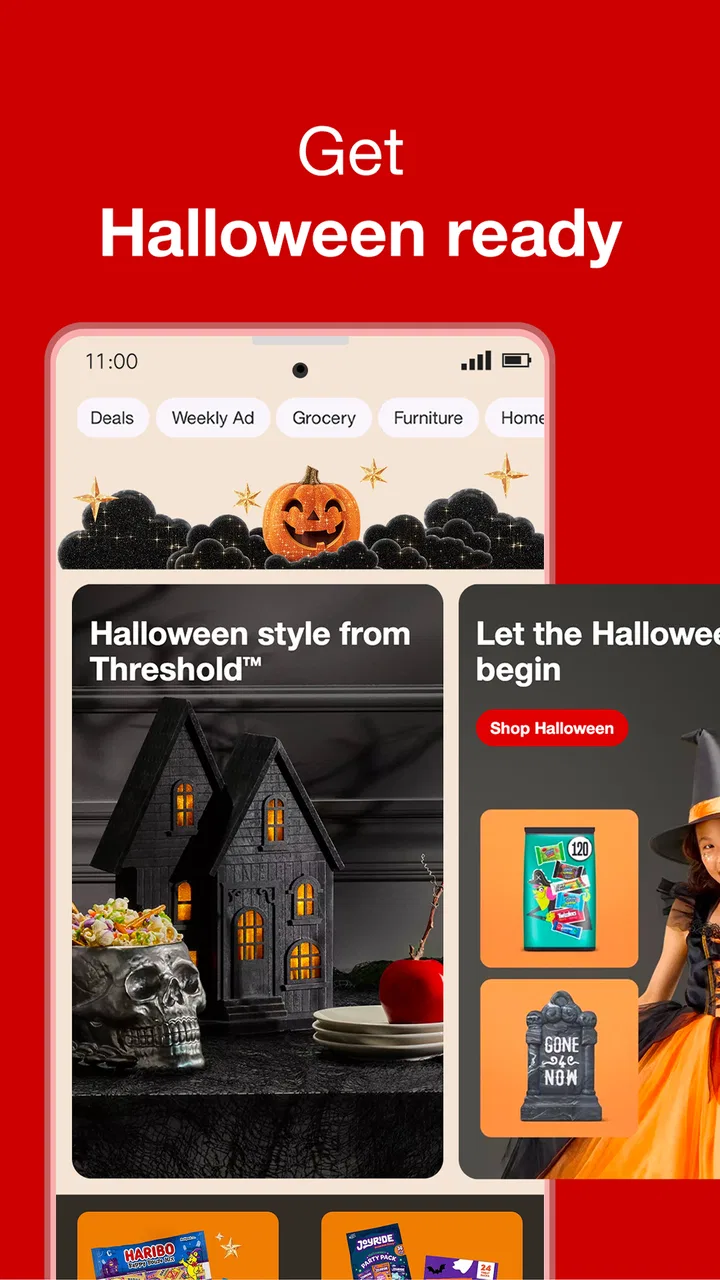
Target: Shop. Style. Save.
- 4.9
- Rating
- 10.00M
- Installs
- Free
- Price

 Analysis by App-foxy
I came away from Target: Shop Deals & Trends with a clear impression: it is most useful when I already know what I need from Target and want to make the trip, order, or browsing session more efficient. It is a free shopping app from Target Corporation, covering everyday essentials alongside style, beauty, and home items. I would not call it a universal replacement for every shopping app, but for people who regularly buy from Target, it brings the store’s broad selection into a much more manageable format.
My main recommendation is simple. If you use Target as a regular one-stop shop, this app deserves a place on your phone. If you only visit occasionally, dislike shopping through a large catalog, or mainly want the absolute lowest price from any retailer, the value is less obvious. The app works best as a practical bridge between planning and purchasing rather than as a purely inspirational shopping experience.
How Target’s app feels in everyday use
The first thing I noticed is how naturally the app fits the way people actually shop at Target. I can begin with a broad need, such as household supplies, clothing, cosmetics, snacks, or room decorations, and gradually narrow the search. That matters because Target’s range can feel overwhelming in a browser. On a phone, categories, search, product pages, and cart management make the selection easier to approach in smaller steps.
You May Also Like

 Blood Strike: 2.5 Anniversary
Blood Strike’s Loadouts Turn Every Drop Into a Tactical Gamble
A close look at Blood Strike’s custom loadouts: how fast access to signature weapons reshapes its battle royale rhythm, rewards preparation, and narrows the gap between fights.

 Pandora - Music & Podcasts
Pandora’s Music Is Easy to Start, but Harder to Recover
Pandora’s strength is its low-effort path from a seed to a station. Its weak spot is how much confidence it asks you to place in connection, setup, and quiet recovery.

 8 Ball Pool
 Is Built on Rivalries, Rematches, and Routine
A close look at the rivalries, rematches, shared routines, and unanswered safety questions that turn a quick pool match into a persistent mobile community.

 Samsung Music
’s Quiet Strength Is Playing What You Already Own
Its reach comes less from spectacle than from dependable access to a personal library. That simplicity is both the app’s strongest retention engine and its ceiling.

 AccuWeather: Weather Radar
AccuWeather Review: A Quick, Clear Forecast for Everyday Decisions
For everyday plans, the best forecast is the one you can understand quickly. AccuWeather makes rain timing, radar, and local conditions easy to act on, with a few trade-offs.

 Hill Climb Racing
Why Hill Climb Racing Still Turns Crashes Into One More Run
A tiny car, a bumpy hill and one more upgrade: Hill Climb Racing keeps resurfacing because its simple chaos makes every near-miss feel personal.
More From Our News Desk
View All News


The store’s focus is not limited to one type of customer or one kind of purchase. I might open the app for shampoo, then notice a storage solution for the kitchen, check a clothing item, and finish by adding groceries. That variety is one of its strongest qualities, but it also creates a challenge: the experience can become distracting. I recommend entering with a short list when I want to shop quickly, because browsing without a plan can turn a simple errand into a much longer session.
Target Corporation has kept the app centered on shopping rather than trying to turn it into a social network or a complicated lifestyle platform. The product pages are there to help me decide, the cart keeps the order together, and the store information supports the choice between receiving an order and handling the purchase in person. That straightforward purpose is a strength.
The app has been available since August 31, 2010, and its current version is 2025.49.1. It supports devices running iOS or Android version 9 or later, which makes it accessible to many people using older phones. It is rated for Everyone, and there is no purchase price to download it. Those details make it easy to try without committing money or replacing a phone first.
Where it saves me the most time
The biggest practical benefit is preparation. Before leaving home, I can search for an item, compare the available choices, review its details, and decide whether it makes more sense to order or visit a store. Even when I still prefer shopping in person, having a better idea of what I am looking for reduces wandering through aisles.
A realistic example is a rushed weekend household reset. I might need laundry products, paper goods, a small kitchen item, and a birthday gift. Instead of making separate searches across several websites, I can build the list in one Target cart. I can inspect alternatives as I go, remove items that do not fit the budget, and make the final decision with the entire basket visible. The convenience comes less from one spectacular feature than from having several ordinary tasks in one place.
I also find the app useful for purchases where appearance matters. Clothing, beauty products, and home decor are easier to browse on a phone than they are to remember from a quick store visit. Product photos give me a starting point, while descriptions help me check whether an item matches what I had in mind. For decor especially, I use the app to form a shortlist before I visit a store. That keeps me from buying the first attractive object I see.
A useful habit is to separate discovery from commitment. I can save a few possible choices mentally or in the cart, compare them side by side, and only then decide. This is better than opening a product page and buying immediately, particularly for clothing sizes, beauty shades, or home items that need to coordinate with things I already own.
Shopping across several departments without losing control
Target’s broad catalog is both the reason to use the app and the reason it can feel busy. I can move from essentials to fashion or from personal care to home furnishings without switching services. For a family, that can make a single order much more convenient than making separate purchases from specialist retailers.
Still, I would not treat the app as a specialist tool for every department. Someone choosing a highly technical electronic product, comparing detailed specifications, or seeking the widest possible selection may prefer a retailer built around that category. Target is strongest when convenience, familiar household shopping, and a mixed basket matter more than exhaustive technical comparison.
The same trade-off appears with clothing and beauty. The app is handy for discovering options and checking basic product information, but online presentation cannot fully replace trying on a garment or seeing a color in person. I would use it to narrow the field, not to assume that every visual detail will match my expectations perfectly.
For home decor, I find the app more useful as a planning tool than as a final authority. A lamp, organizer, or decorative item may look right on screen but feel different in an actual room. My approach is to check dimensions carefully, think about the surrounding space, and avoid treating a polished product image as a guarantee of scale or texture.
The important limitation: convenience depends on the purchase
The app does not remove the uncertainty that comes with shopping online. A product can appear suitable until I notice a missing detail, an unsuitable size, or a color that is difficult to judge on my display. That is not a flaw unique to Target, but it is important when deciding whether the app should replace an in-store visit.
I also think the large selection can make comparison tiring. A quick search may produce many similar results, and the responsibility for choosing the right one remains with me. When I am buying something familiar, this is easy. When I am choosing between several unfamiliar brands or versions, I need patience. The app helps me access the choices; it does not automatically make the decision for me.
Another point to consider is that the best shopping method can vary by item. For a planned basket of routine products, using the app is efficient. For an urgent purchase, a product I need to examine physically, or something where fit and finish are central, going directly to a store may be better. I would avoid assuming that every item is equally suitable for delivery or app-based ordering.
That distinction is why I see this as a companion to Target shopping rather than a total substitute for the physical store. The app can help me prepare, but there are moments when walking through the store, checking an item with my own eyes, or asking an employee is still the smarter choice.
Who will get the most from it
The best audience is regular Target shoppers who want one place to handle mixed purchases. Parents managing household lists, students furnishing a room, busy workers buying essentials after hours, and anyone who combines beauty, clothing, food, and home items in the same trip can all benefit from the app’s range.
I would also recommend it to people who like to shop deliberately. If I want to compare several options before leaving home, the app gives me time to think instead of making every decision in a crowded aisle. It is particularly useful for repeat purchases because I already understand the store’s selection and can move more quickly through familiar categories.
It is less suitable for someone who wants a completely retailer-neutral comparison. The app is designed around Target’s own inventory and shopping experience, so it will not show me every competing product or tell me whether another retailer has a better deal. If price hunting across the entire market is my main goal, I should use a comparison-focused service as well.
I would also hesitate to recommend it as the only tool for people who rarely shop at Target. Downloading another app may not be worthwhile for a single occasional purchase, especially if I can complete that transaction comfortably through a browser or in person. The more regularly I shop there, the more its organizational convenience begins to matter.
Three habits that make the app more useful
First, I use it before shopping rather than only at the moment of checkout. A short planning session helps me decide which items need closer inspection, which purchases can wait, and whether I should make one combined basket. This reduces impulse decisions and makes the app feel like a planning assistant instead of just a digital cash register.
Second, I treat product details as a checklist. For clothing, I check the available sizing information and think about fit before adding anything. For home goods, I consider measurements and placement. For beauty products, I pay attention to the exact variant rather than relying on a familiar package color. These small checks prevent the most common disappointment: receiving something that was technically the right product but practically the wrong choice.
Third, I divide a large shopping session into two passes. In the first pass, I gather likely items. In the second, I remove duplicates, reconsider nonessential purchases, and review the basket as a whole. This is especially helpful when moving between essentials and trend-driven products. The app makes it easy to add appealing things; a deliberate second look restores control.
A fourth habit is to decide in advance whether I am using the app to browse, plan a store visit, or place an order. Those are different tasks. Browsing can be relaxed, planning should be selective, and ordering requires the most careful review. Giving the session a purpose keeps the broad catalog from becoming a source of unnecessary distraction.
How it compares with ordinary alternatives
Compared with walking into a Target store without preparation, the app gives me more time to search and compare. It is better for building a mixed list and thinking through choices before I travel. The store remains better when I want to touch an item, judge its scale, check a color directly, or make a spontaneous decision based on what is physically available.
Compared with a general online marketplace, the app feels more focused on the Target shopping relationship. That can be an advantage when I trust the retailer’s assortment and want a familiar experience across several departments. A broad marketplace may offer more sellers and a wider range of niche products, but it can also require more effort to evaluate who is selling an item and how closely alternatives compare.
Compared with specialist retailers, Target’s strength is convenience across categories. A beauty specialist may provide deeper product education, a fashion retailer may offer more focused sizing and styling tools, and an electronics specialist may present more technical comparisons. Target’s app wins when I want to combine several ordinary errands rather than optimize one narrow purchase.
The app’s average rating is 3.6 from around 299 thousand ratings, with roughly 100 thousand written reviews, and it has passed 10 million installs. I read those figures as evidence of a widely used shopping tool with a mixed experience rather than as a reason to expect perfection. A large audience can reveal both strong everyday usefulness and the frustration that comes from depending on an app for time-sensitive purchases.
My verdict for a real shopping routine
After using it as a planning and purchasing companion, I think Target: Shop Deals & Trends succeeds because it connects many ordinary shopping needs without making me use a separate service for every department. Its strongest quality is not novelty; it is the practical advantage of having Target’s style, home, beauty, and essential-item selection available while I am making a list.
The limitations are equally clear. Online browsing cannot fully replace physical inspection, a large catalog can slow down decisions, and the app is not designed to compare the entire market. I would skip it if I rarely shop at Target or if my priority is finding the lowest price across every retailer. I would also choose a specialist app when I need unusually detailed guidance in one category.
For regular Target customers, though, I recommend installing it. Use it to prepare a store visit, assemble a mixed household basket, compare likely choices, and avoid forgetting routine items. Just keep the final decision grounded in the purchase itself: check the details, reconsider the basket, and visit the store when appearance, fit, or urgency matters more than convenience.
In short, this is a useful shopping app for people who value organized access to Target’s broad everyday selection. It will not make every purchase effortless, but it can make a familiar shopping routine noticeably more controlled and less scattered.
FAQs for Target: Shop. Style. Save.
01What features does the Target: Shop Deals & Trends app offer?
The Target app provides a seamless shopping experience with features like personalized deals, a barcode scanner for easy price checks, and the ability to browse and purchase items directly from the app. Users can also manage their Target Circle rewards, view weekly ads, and find store locations with ease.
02Is the Target app free to download and use?
Yes, the Target: Shop Deals & Trends app is free to download on both Android and iOS devices. While the app itself doesn’t charge any fees, users may incur charges for purchases made within the app. Keep an eye out for any special promotions or discounts available through the app.
03Can I use the Target app for online order pickups?
Absolutely! The Target app offers convenient options such as Order Pickup and Drive Up. Users can shop online and choose to pick up their items in-store or have them brought out to their car. This feature enhances the shopping experience, making it faster and more efficient for busy customers.
04How does the Target Circle rewards program work within the app?
The Target Circle rewards program, integrated into the app, allows users to earn 1% on every purchase to redeem later. Members can also access exclusive deals, receive birthday rewards, and vote for nonprofits to support in their community. Signing up is straightforward, and rewards are easily accessible through the app.
05Is my personal information safe when using the Target app?
Target takes user privacy and security seriously. The app employs robust security measures to protect personal data. Users are encouraged to keep their app up-to-date and utilize strong passwords. Additionally, Target's privacy policy outlines how personal information is handled, ensuring transparency and user trust.
Pros
- User-friendly interface enhances shopping experience.
- Exclusive discounts for app users.
- Personalized recommendations based on preferences.
- Easy order tracking and notifications.
- Seamless integration with Target Circle rewards.
Cons
- Occasional app crashes disrupt user experience.
- Limited payment options available in-app.
- Some features require strong internet connection.
- Infrequent updates might miss recent trends.
- Search functionality can be inconsistent.

Target: Shop. Style. Save.
Gallery